Coleus Forskohlii Root Extract in Glycotide™
Coleus forskohlii closes the Glycotide list with a mint-family root from Ayurvedic practice.
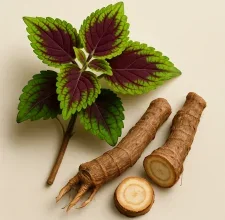
In brief
- A relative of mint and basil
- The swollen root is the part used
- Grown in India, Nepal and Thailand
- Fifth and last on the Glycotide list
What it is
Coleus forskohlii is a low, leafy plant in the mint family. Its leaves have purple and green tones, and its swollen roots hold a natural compound called forskolin. In Ayurveda the root has been part of traditional practice for generations.
Where it comes from
It grows in dry, hilly areas of India, Nepal and Thailand. Farmers harvest the roots, dry them and turn them into powders and extracts.
Why it is in Glycotide
Glycotide includes coleus forskohlii root extract as its mint-family root.* It balances the leaf extracts and the mineral in the formula. Coleus Forskohlii: The Mint-Family Root tells the plant story.
Worth knowing
- Related to mint and basil
- Forskolin is the compound people mention
- The root, not the leaf, is used
- Ask a doctor first if you take medication
Easy ways to explore it
- Look for the Latin name on labels
- Read the coleus guide
- Compare it with the other roots on this site
Keeps company with
Coleus keeps company with:
Public sources
- NIH Office of Dietary Supplements: Dietary supplements, what you need to know
- NCCIH: Using dietary supplements wisely
Common questions
Is it a mint?
It belongs to the mint family.
What is forskolin?
A natural compound found in the coleus root.
Where does it grow?
In India, Nepal and Thailand.
No question matches that word. Try another word or contact us.