Green Tea Leaf Extract in Glycotide™
Green tea leaf extract puts a familiar cup of tea into concentrated form.
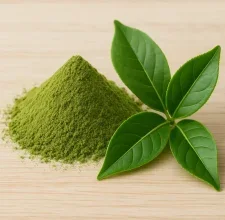
In brief
- From the Camellia sinensis tea plant
- Leaves are heated early, which keeps them green
- Known for natural antioxidants called catechins*
- Fourth of the five Glycotide ingredients
What it is
Green tea comes from the leaves of Camellia sinensis, the same plant that gives us black tea. The difference is in the handling: for green tea, the leaves are heated soon after picking, which keeps their color and many of their natural plant compounds.
Where it comes from
Tea is grown in China, Japan, India, Kenya and many other places. After picking, the leaves are heated, rolled and dried. An extract takes the plant compounds from the leaf and concentrates them.
Why it is in Glycotide
Glycotide includes green tea leaf extract for natural antioxidant support.* It sits next to Panax ginseng in the formula. Ginseng and Green Tea covers both.
Worth knowing
- Antioxidants are natural compounds in plants
- Green tea naturally has a little caffeine
- A cup of tea and an extract are not the same strength
- Amount details are on the Supplement Facts panel
Easy ways to explore it
- Brew a cup of green tea with breakfast
- Mix your Glycotide drops into a warm, not hot, drink
- Read the tea guide
Keeps company with
Green tea keeps company with:
Public sources
Common questions
Is this the same as matcha?
Matcha is whole ground green tea leaf. Green tea leaf extract is a concentrated extract from the leaf.
Does it contain caffeine?
Green tea naturally contains some caffeine, usually less than coffee.
Why green and not black?
Green tea leaves are heated early, which keeps more of their natural plant compounds.
No question matches that word. Try another word or contact us.